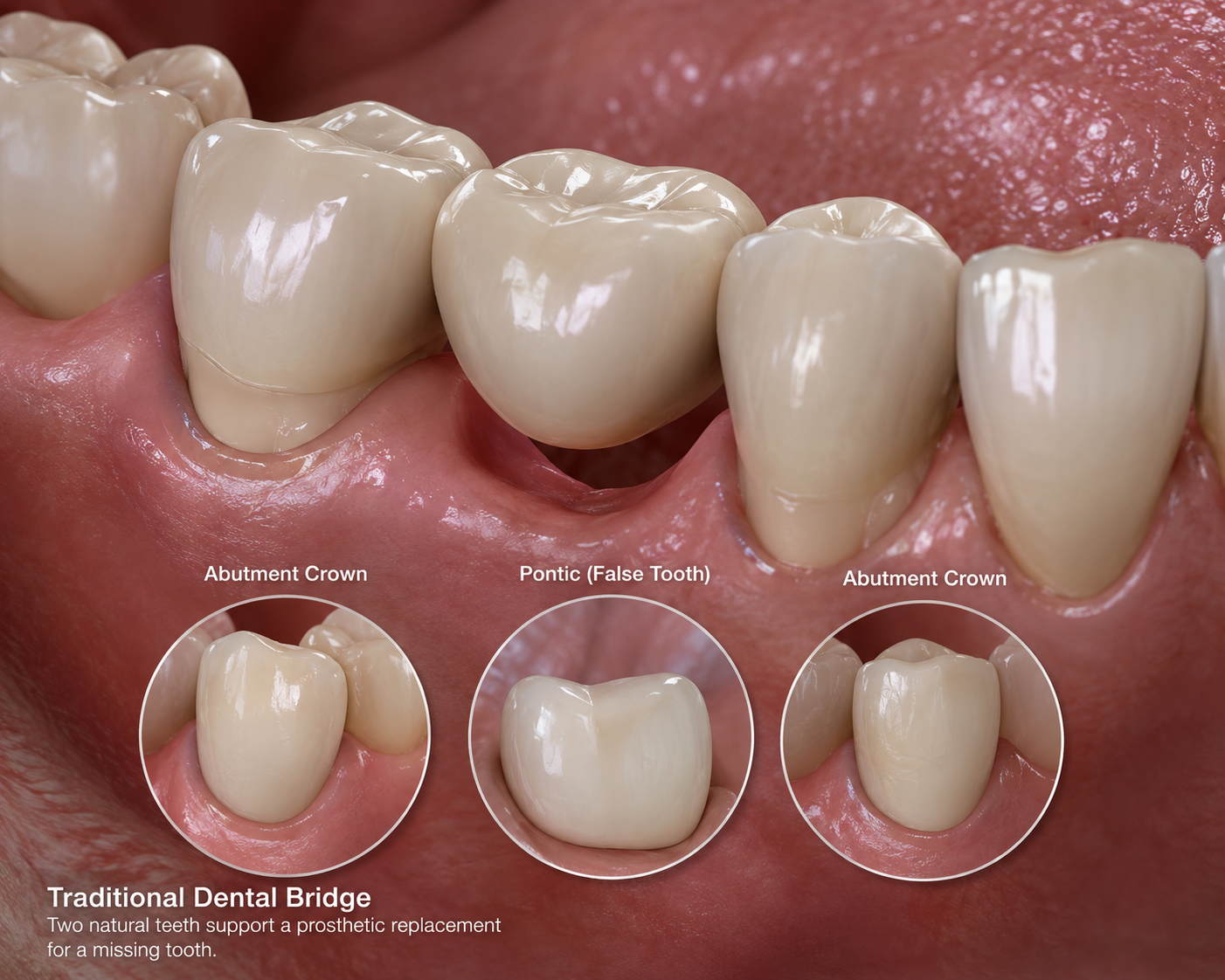
There’s no honest way to give you a flat number without an exam first. What we can tell you is what goes into that price. A dental bridge covers the crowns that sit over your natural teeth (or implants) on either side of the gap, the false tooth or teeth in between, called a pontic, and the lab work that goes into making it all fit your bite correctly.
Where the real variation comes in is the type of bridge you need and how many teeth you’re replacing. A single missing tooth is a much simpler case than a three- or four-tooth gap, and a traditional bridge is priced differently than an implant-supported one.
We’re not going to throw out a made-up average here, because it wouldn’t mean much for your actual situation. What we will do is sit down with you, look at what’s going on in your mouth, and give you a real number tied to a real plan. That’s the only estimate worth trusting anyway.
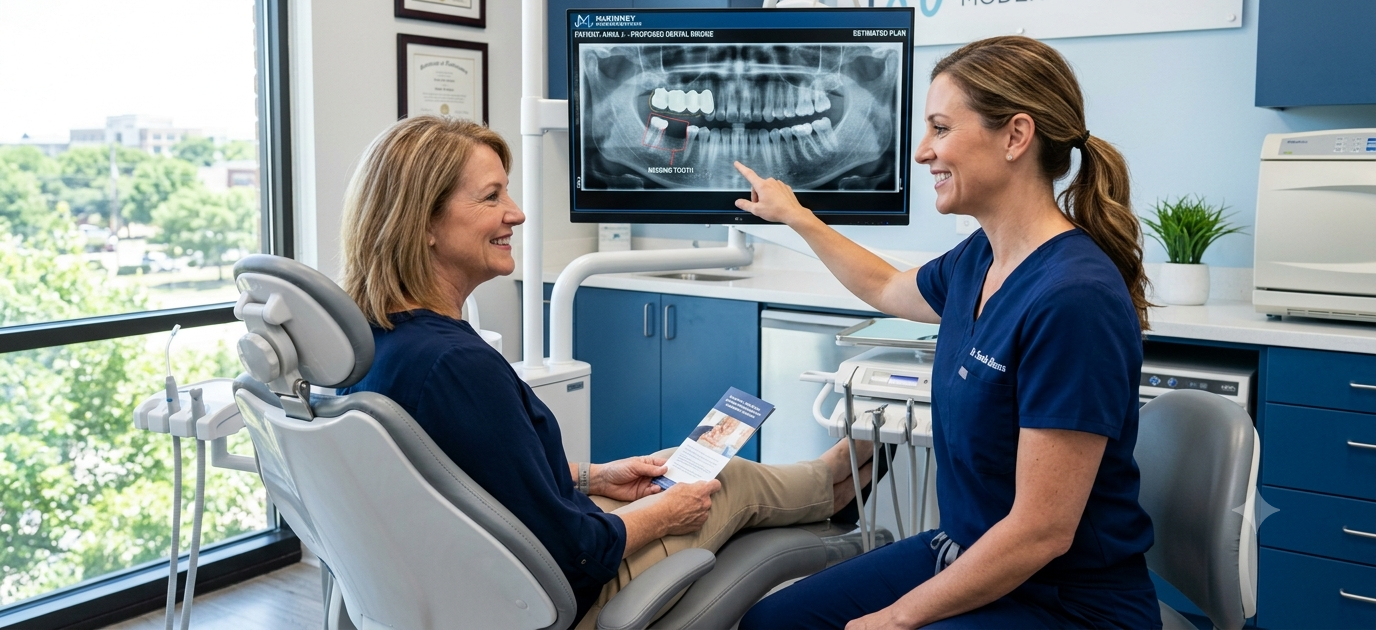
A few things drive the price up or down, and most of them come down to how much work is actually involved.
The type of bridge matters first. A traditional bridge, a Maryland bridge, a cantilever, and an implant-supported bridge all involve different amounts of preparation and different materials, so they land at different price points.
How many teeth you’re missing plays into it too. Replacing one tooth is a smaller job than bridging a gap of two or three. The materials chosen for the crowns and pontic, whether that’s porcelain, zirconia, or a metal alloy, also shift the cost depending on durability and appearance.
Paying without insurance backing you up understandably makes people nervous about the number. Here’s the honest picture. Without insurance, you’re covering the full cost of the bridge yourself, which includes the crowns, the pontic, the lab fabrication, and whatever prep work your teeth need beforehand.
That said, going without insurance doesn’t mean you’re stuck paying everything at once. We offer payment plans that break the cost into pieces that are actually manageable, and financing is available through outside providers if that fits your situation better.
This is the most common type, using crowns on the teeth next to the gap to hold the pontic in place. Cost depends mainly on how many teeth are involved and the material chosen for the crowns.
A Maryland bridge uses a metal or porcelain framework bonded to the back of neighbouring teeth instead of full crowns, which means less prep work. That usually keeps the cost a bit lower, though it’s typically reserved for front teeth.
Insurance changes the math, but not always as much as people expect. Most dental plans that cover bridges treat them as a major procedure, which usually means partial coverage rather than full coverage. You’ll want to check your specific plan, since this varies a lot from one insurer to the next.
Your deductible comes into play first, meaning you’ll pay a set amount out of pocket before insurance starts contributing anything. Then there’s your annual maximum, the cap on what your plan will pay toward dental work in a given year. If a bridge pushes you past that cap, or if you’ve already used part of it earlier in the year, the rest becomes your responsibility.
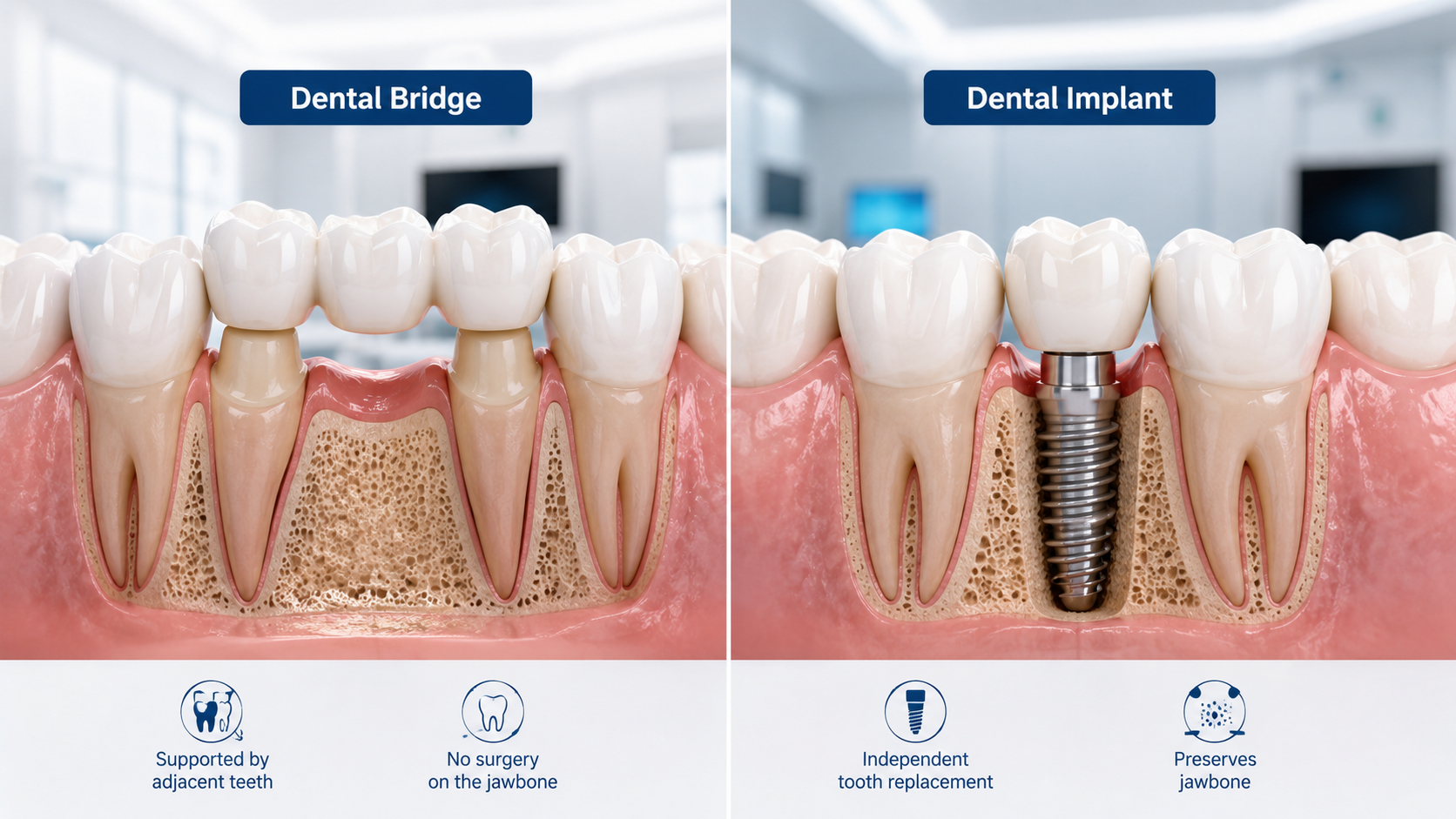
Patients often ask us to just settle it: bridge or implant? The honest answer is it depends on your situation, but here’s how they stack up.
Bridges typically cost less upfront, which is the main draw for a lot of patients. Implants cost more initially since the process involves surgically placing a post and allowing it to heal before the crown goes on.
Where it gets more interesting is longevity. A bridge usually lasts somewhere around ten to fifteen years before it needs replacing, while an implant can last decades, sometimes a lifetime, with proper care.
There’s a lot that goes into trusting someone with a restoration you’re going to rely on every day, multiple times a day, for years. Our dentists have placed a lot of bridges over the years, across all the different types, which means fewer surprises and a smoother process for you from start to finish.
We use current technology, including digital impressions, so your bridge fits properly the first time instead of requiring adjustments down the road or a bridge that never quite feels right.
Not sure what a bridge would actually cost for your situation? The only real way to know is to come in and let us take a look. We’ll walk you through your options, explain what’s driving the price in your specific case, and give you a personalized estimate before you commit to anything, so you’re making a decision with real information instead of a guess.
It depends on the type of bridge, how many teeth you’re replacing, and the materials used. A consultation gives you an accurate number.
You’ll cover the full cost yourself, but payment plans and financing options can spread that amount into manageable monthly payments.
There’s no single average that applies to everyone. Pricing depends on your specific case and the type of bridge recommended.
Many plans offer partial coverage, though your deductible and annual maximum affect how much you’ll pay out of pocket.
Usually, upfront, yes. But implants often last longer, which can make them more cost-effective over time.
With good care, a bridge typically lasts around ten to fifteen years before it needs replacing.
Yes. We offer payment plans and financing options to help spread the cost into monthly payments.
It varies by case, but Maryland bridges often cost less upfront since they involve less preparation of surrounding teeth.
Whether it's stress-relieving sedation dentistry, TMJ treatment, or life-changing smile makeovers with veneers, our team at Marble Dental McKinney is ready to meet your unique dental needs and goals. Visit us at 7650 W Stacy Rd #240, near the Stacy Road and Alma Road intersection, next to Domino’s and Duino Coffee. Need help finding us? Just give our office a call!