If you’re missing a tooth, or several, you already know it’s about more than how your smile looks. Chewing gets harder. Certain foods get crossed off the list. Some people find themselves covering their mouth when they laugh. It adds up.
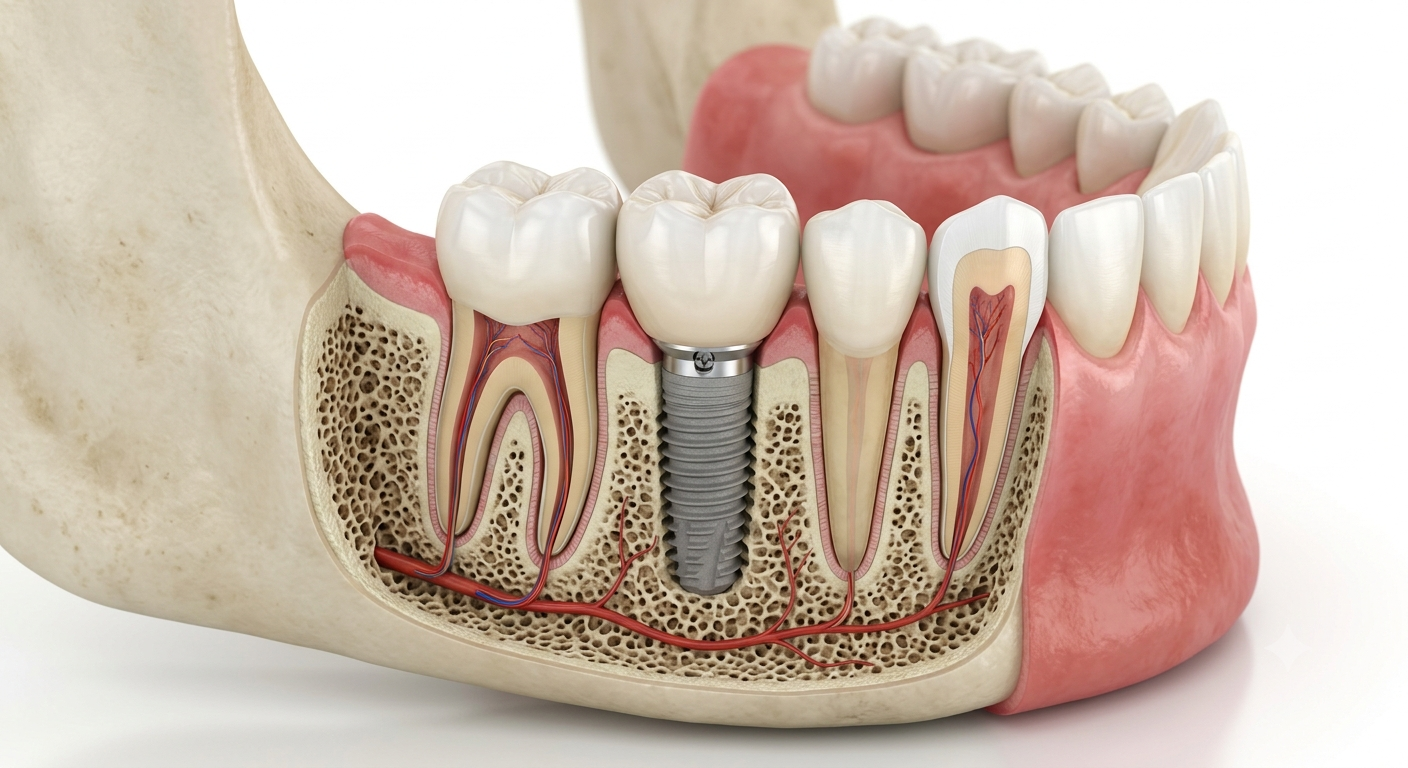
Dental implants are the closest thing dentistry has to actually replacing a tooth, root and all. A titanium post goes into the jawbone where the root used to be, and over the next few months it fuses with the bone itself. Once that’s healed, a crown gets attached on top, and from that point on it functions like the tooth that was always supposed to be there.
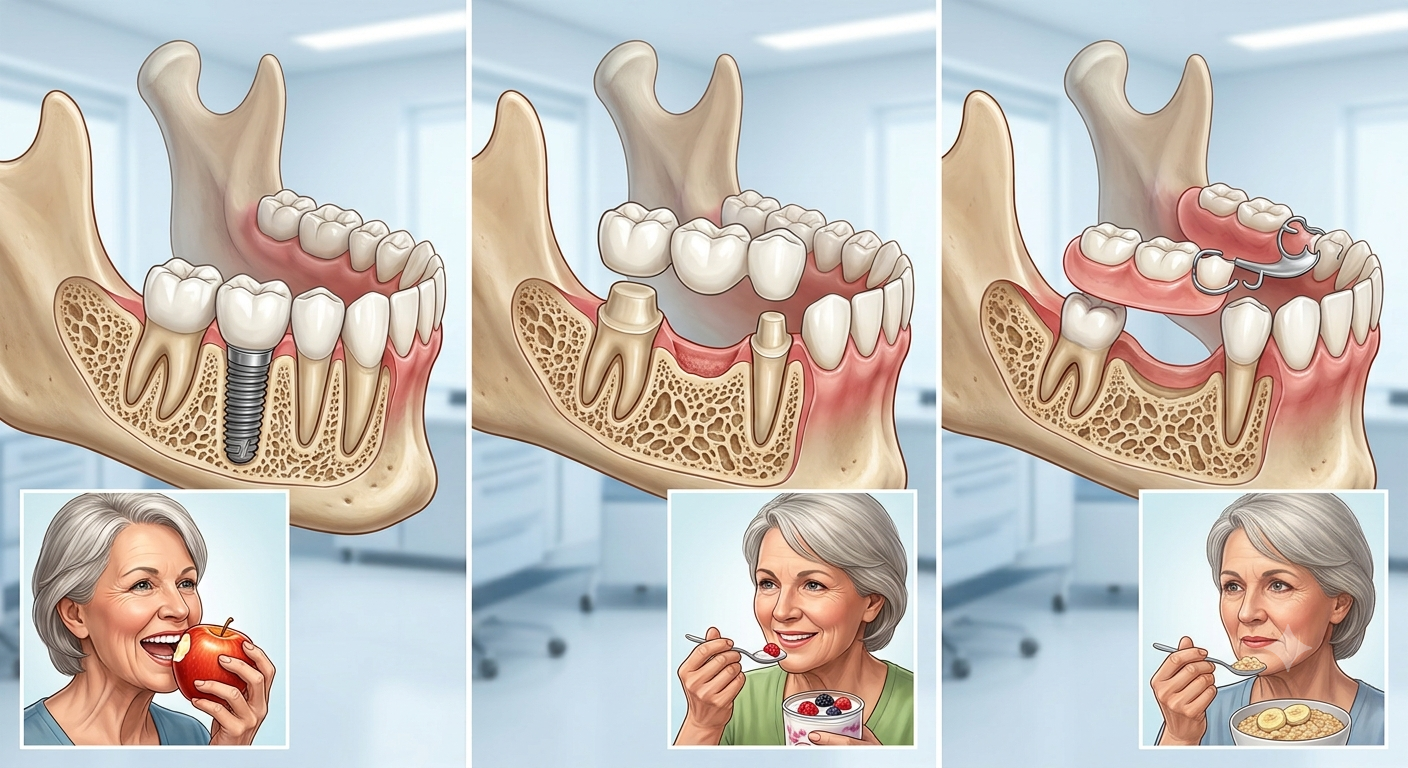
That’s really the big difference between implants and older options like bridges or dentures. A bridge needs to grind down two healthy teeth next to the gap so it has something to anchor to. Dentures sit on top of the gums and can slide around or click when you talk. Implants don’t ask anything of the teeth around them, and they don’t move.
There’s also the bone underneath. Once a tooth is gone, the jawbone in that spot starts to shrink from lack of use. An implant, anchored the same way a natural root is, keeps that from happening.
Patients who’ve had implants for years tend to say the same things: they forget which tooth is the implant, they eat what they want again, and they’ve stopped thinking about their teeth altogether. Done well, an implant can last decades, long past the point you’d ever need to think about it again.
At Marble Dental McKinney, we hear the same question from almost every implant patient before anything else: what’s this going to cost me? It’s a fair question, and it deserves a real answer. Below, we’ve broken down what actually drives implant pricing so you’re not walking in blind.

Ask five different implant patients what they paid and you’ll probably get five different numbers. That’s not because pricing is random. It’s because every mouth needs something a little different.
The most obvious factor is how many implants you need. Replacing one tooth is a much smaller job than replacing several, or restoring an entire arch. Beyond that, the materials matter too, both the implant post itself and the crown that goes on top, since there’s a range of options at different price points.
The honest answer is: it depends on what you actually need. Here’s how the main options break down.
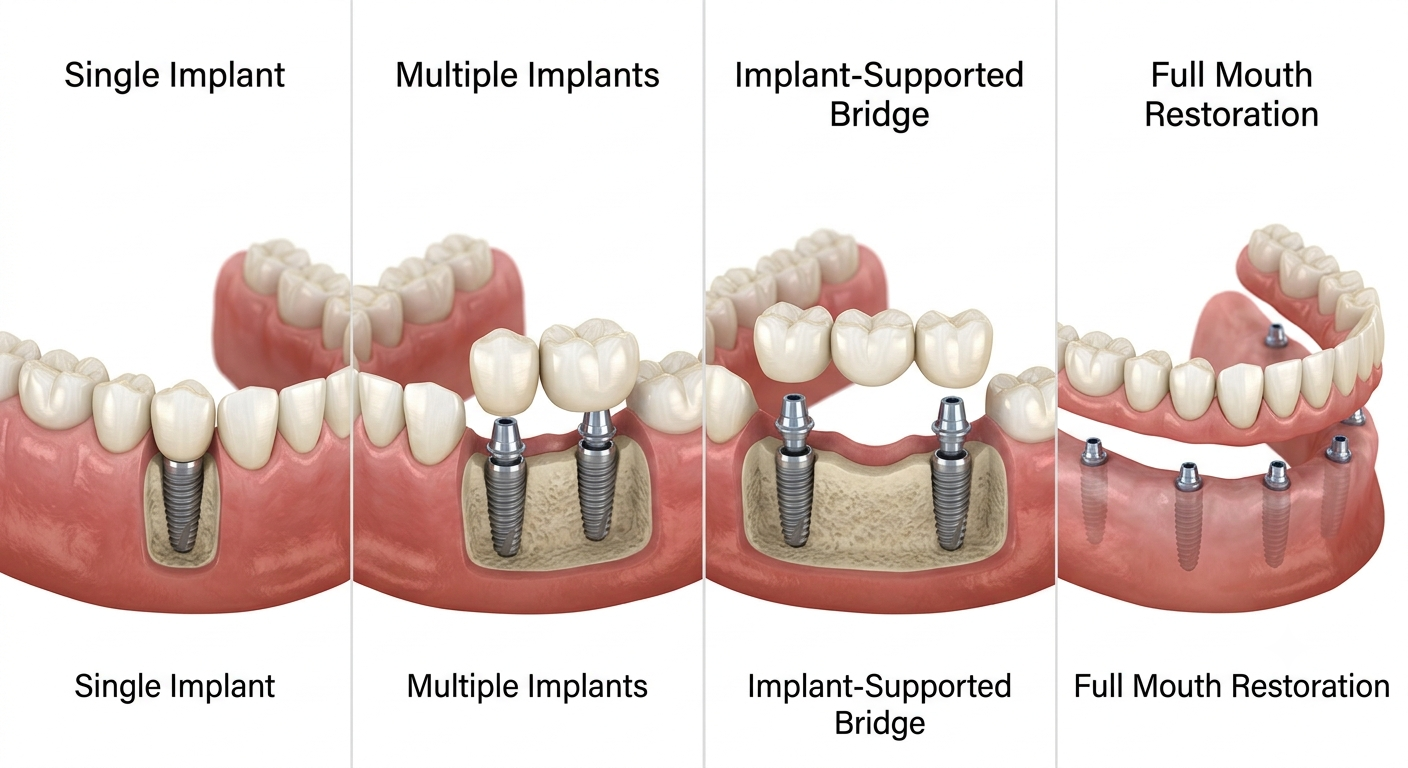
Single Tooth Implant: This is one implant post, one abutment, one crown, replacing a single missing tooth. It’s the most common question we get: how much does a dental implant cost for one tooth? And the answer really comes down to the materials used and whether anything needs to happen first, like an extraction or a graft.
Multiple Dental Implants: If you’re missing a few teeth scattered around your mouth rather than in a row, each gap can get its own implant. This tends to preserve the most bone and gum tissue, but naturally costs more than a single tooth since you’re multiplying the procedure.
We get why people want a ballpark number before they even book anything. But here’s the thing about implant pricing: it’s not one flat fee; it’s a treatment plan made up of several pieces.
It usually starts with a consultation and an exam, where we look at your mouth, take images, and figure out whether implants make sense for you. Then comes the actual placement, the surgical step where the implant post goes into the bone.
This is probably the question we hear most: how much does a dental implant cost per tooth? Since it’s the smallest version of implant treatment, it’s worth breaking down what you’re actually paying for.
There’s the implant itself, the titanium post that sits in the jawbone and does the job a natural root used to do. Then there’s the abutment, a small piece that connects the implant to the crown above it, kind of like a coupling piece. And then the crown, the part everyone actually sees, shaped and colored to blend in with the teeth around it.
We won’t pretend implants are the cheapest option on the table, because they’re not. But cheap and cost-effective aren’t the same thing.
Dentures and bridges are workarounds. Implants are closer to a fix. Because an implant stimulates the jawbone the way a real root does, it stops the bone loss that quietly happens after tooth loss, the kind that eventually changes the shape of someone’s face if it goes on long enough. It also means the teeth next to the gap don’t start drifting into the space, which is a real problem with missing teeth that nobody warns you about until it’s already happening.
Insurance coverage for implants is a mixed bag. Some plans will cover part of it, often the crown portion or diagnostic imaging, while the surgical piece gets treated differently depending on the carrier. It’s worth having us check your specific plan rather than guessing.
For whatever insurance doesn’t cover, we’ve got a few ways to make it manageable. Payment plans that spread things out. Financing through outside providers if that fits your situation better.
There’s no shortage of dentists in this area. Here’s why patients end up choosing us for implants specifically.
Our team has actually placed and restored a lot of implants, not just read about them. We use digital imaging so treatment gets planned with real precision instead of guesswork, and every plan we build is shaped around the person sitting in the chair, not a template. We also try to keep this affordable in practice, not just in a sentence on a website, which is why financing options and honest pricing conversations happen from day one.
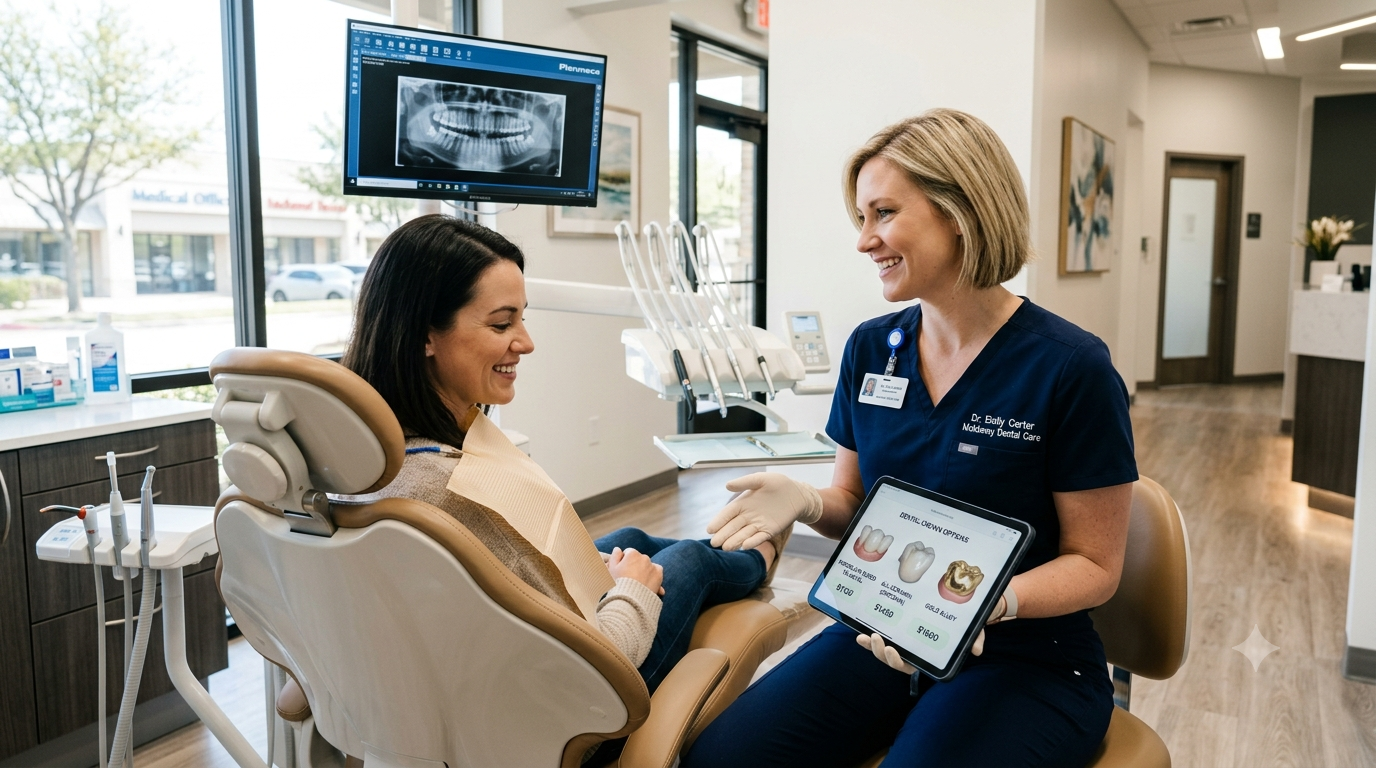
Curious what implants would actually cost for your situation? Come in and find out for real. We’ll take a look, answer whatever questions you’ve got, and put together a plan built around your mouth, your timeline, and your budget. No pressure, just honest answers.
It depends on how many implants you need, the materials, and whether extra work like grafting is required. A consultation gets you a real number.
A single implant covers the post, abutment, and crown. Pricing shifts based on your case and any prep work involved.
Per-tooth cost depends on materials and whether anything needs to happen first, like an extraction or bone graft.
Same basic process as any implant, though front teeth often need extra attention to match your smile naturally.
Full mouth implants use several posts to support an entire arch. Cost depends on the technique and your jaw’s condition.
Some plans cover part of it, often the crown or imaging. We can check your specific coverage for you.
For most patients, yes. They protect bone, keep teeth from shifting, and can last decades with proper care.
The implant itself can last a lifetime. The crown on top may need replacing after fifteen to twenty years.
Whether it's stress-relieving sedation dentistry, TMJ treatment, or life-changing smile makeovers with veneers, our team at Marble Dental McKinney is ready to meet your unique dental needs and goals. Visit us at 7650 W Stacy Rd #240, near the Stacy Road and Alma Road intersection, next to Domino’s and Duino Coffee. Need help finding us? Just give our office a call!